
7 Proven Local SEO for Small Businesses: The Ultimate Guide to Rank Higher on Google and Get More Customers
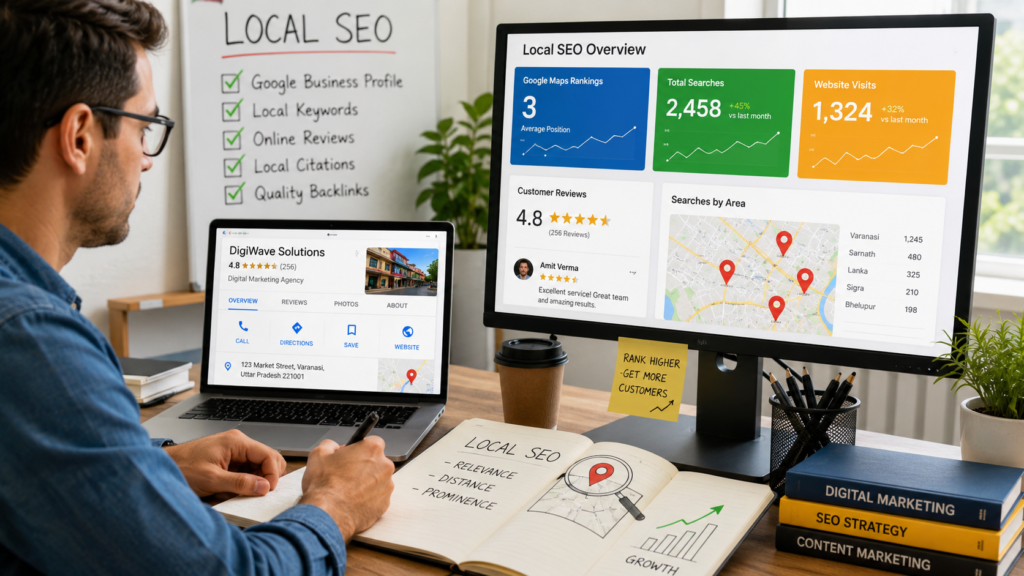
If you own a local business, you already know how important it is to appear in Google search results when potential customers are looking for products or services nearby. Whether you run a restaurant, salon, clinic, repair service, retail store, or consultancy, your online visibility directly impacts your revenue.
This is where Local SEO for Small Businesses becomes essential. Local SEO helps businesses appear in local search results, Google Maps, and the Google Local Pack. When implemented correctly, it can increase website traffic, generate more phone calls, attract walk-in customers, and boost sales.
According to Google, a large percentage of local searches result in customer actions within a short period. This means businesses that rank higher in local search results often receive more inquiries and conversions than competitors who are not optimized.
In this comprehensive guide, you’ll learn everything you need to know about local SEO, including optimization strategies, ranking factors, common mistakes, and actionable tips that can help your business dominate local search results.
What is Local SEO? https://anamikamarketify.com/services/
Local SEO (Local Search Engine Optimization) is the process of optimizing your online presence to improve visibility in location-based searches.
For example, when users search for:
- Digital marketing agency near me
- Best bakery in Delhi
- Dentist near me
- Local plumber in Varanasi
Google displays businesses that are most relevant to the searcher’s location and intent.
Unlike traditional SEO, which targets national or global audiences, local SEO focuses on attracting customers from a specific geographic area.
Why Local SEO Matters for Small Businesses
Small businesses often compete against larger companies with bigger marketing budgets. Local SEO for Small Businesses helps level the playing field by allowing businesses to target customers in their immediate service area.
Key Benefits of Local SEO for Small Businesses
Increased Online Visibility
When your business appears in local search results, more potential customers can discover your services.
Higher Quality Traffic
Local searches typically come from users who are actively looking for solutions, making them more likely to convert.
More Phone Calls and Leads
Optimized local listings encourage customers to call directly from search results.
Better Customer Trust
Businesses with strong reviews, complete profiles, and accurate information tend to earn more trust.
Improved Conversion Rates
Local search users often have immediate purchase intent, leading to higher conversion rates.
How Google Determines Local Rankings
Google uses several factors to determine which businesses appear in local search results.
Relevance
How well your business matches a user’s search query.
Distance
How close your business is to the searcher’s location.
Prominence
How well-known and trusted your business appears online.
Prominence is influenced by:
- Online reviews
- Website authority
- Local citations
- Backlinks
- Brand reputation
Understanding these ranking factors is the foundation of successful Local SEO for Small Businesses.
Optimize Your Google Business Profile
Your Google Business Profile (formerly Google My Business) is one of the most important elements of local SEO.
Complete Every Section
Ensure your profile includes:
- Business name
- Address
- Phone number
- Website URL
- Business category
- Business hours
- Service areas
- Photos
Add High-Quality Images
Businesses with quality images often receive more clicks and engagement.
Upload:
- Storefront photos
- Interior photos
- Team photos
- Product images
- Service images
Write an Optimized Business Description
Include relevant local keywords naturally while describing your services.
Keep Information Updated
Regularly update:
- Operating hours
- Contact details
- Services
- Promotions
Build Consistent NAP Information
NAP stands for:
- Name
- Address
- Phone Number
Consistency is crucial across all online platforms.
Google uses this information to verify your business legitimacy.
Where Your NAP Should Match
- Website
- Google Business Profile
- Local directories
- Industry directories
- Review platforms
Even minor inconsistencies can negatively impact rankings.
Optimize Your Website for Local SEO https://www.semrush.com
Your website plays a critical role in local search visibility.
Use Local Keywords
Include keywords that combine your services with location terms.
Examples:
- Digital marketing agency in Varanasi
- SEO services in Delhi
- Best bakery in Lucknow
Use them naturally throughout your content.
Create Location-Specific Pages
If you serve multiple cities, create dedicated pages for each location.
For example:
- SEO Services in Varanasi
- SEO Services in Delhi
- SEO Services in Mumbai
Each page should contain unique content.
Optimize Title Tags and Meta Descriptions
Your page titles should include:
- Primary keyword
- Location
- Brand name
Example:
Digital Marketing Services in Varanasi | DigiWave
Meta descriptions should encourage clicks while incorporating target keywords.
Improve Mobile Friendliness
Most local searches happen on mobile devices.
Ensure your website:
- Loads quickly
- Has responsive design
- Features clickable phone numbers
- Provides easy navigation
Get More Online Reviews
Customer reviews are one of the strongest local ranking signals.
Why Reviews Matter
Reviews influence:
- Rankings
- Customer trust
- Click-through rates
- Purchase decisions
Encourage Customer Reviews
Ask satisfied customers to leave reviews after:
- Purchases
- Completed projects
- Successful service experiences
Respond to Every Review
Reply professionally to:
- Positive reviews
- Neutral reviews
- Negative reviews
This demonstrates customer engagement and trustworthiness.
Create Local Content
Content marketing remains a powerful Local SEO for Small Businesses strategy.
Write About Local Topics
Create blog posts related to your area.
Examples:
- Best Digital Marketing Trends for Businesses in Varanasi
- Local Business Marketing Guide
- How Small Businesses Can Increase Sales in Uttar Pradesh
Cover Local Events
Discuss:
- Community events
- Festivals
- Local business news
- Industry updates
This helps establish local relevance.
Build Local Citations
A citation is any online mention of your business information.
Examples include:
- Business directories
- Local listings
- Industry websites
Benefits of Citations
- Improve trust signals
- Increase visibility
- Support local rankings
Ensure all citations use consistent NAP information.
Earn High-Quality Local Backlinks
Backlinks remain one of Google’s strongest ranking factors.
Local Link Building Ideas
Partner with Local Businesses
Collaborate with complementary businesses.
Sponsor Local Events
Event sponsorship often earns valuable local links.
Join Local Organizations
Chambers of commerce and business associations frequently provide member listings.
Contribute Guest Posts
Write articles for local blogs and publications.
Optimize for Voice Search
Voice search usage continues to grow.
People often ask conversational questions like:
- Where is the best coffee shop near me?
- Which SEO agency is near me?
- What is the best digital marketing service in my area?
Voice Search Optimization Tips
- Use natural language
- Create FAQ sections
- Target long-tail keywords
- Answer common customer questions
Use Schema Markup
Schema markup helps search engines understand your business information.
Benefits of Schema
- Better search visibility
- Rich results
- Improved understanding by search engines
Important schema types include:
- Local Business Schema
- Organization Schema
- Review Schema
- FAQ Schema
Monitor Local SEO Performance
Tracking performance helps identify opportunities for improvement.
Important Metrics
Google Business Profile Insights
Monitor:
- Calls
- Website clicks
- Direction requests
Website Traffic
Track local visitors using analytics tools.
Keyword Rankings
Monitor location-specific keywords regularly.
Conversion Metrics
Measure:
- Leads
- Calls
- Form submissions
- Sales
Common Local SEO Mistakes to Avoid
Many businesses unknowingly damage their local rankings.
Ignoring Google Business Profile
An incomplete profile reduces visibility.
Inconsistent NAP Information
Different contact details create confusion.
Neglecting Reviews
Ignoring customer feedback can harm trust.
Keyword Stuffing
Overusing keywords creates a poor user experience.
Poor Mobile Experience
Mobile usability directly impacts local performance.
Future of Local SEO for Small Businesses
Local SEO for Small Businesses continues evolving as Google improves its algorithms.
Emerging trends include:
- AI-powered search
- Voice search growth
- Hyperlocal targeting
- Visual search
- Personalized search results
Businesses that adapt to these changes will remain competitive.
Local SEO for Small Businesses: Common Challenges and Solutions
Many business owners understand the importance of local search visibility but struggle to achieve consistent results. While Local SEO for Small Businesses can generate qualified leads and customers, several challenges often prevent businesses from ranking effectively.
Challenge 1: High Competition in Local Markets
In many cities, dozens of businesses compete for the same local keywords. This makes it difficult for new businesses to appear in Google’s Local Pack.
Solution
Focus on niche and long-tail keywords instead of broad terms. For example, rather than targeting “SEO Services,” target “SEO Services for Small Businesses in Varanasi.” This approach helps attract highly targeted traffic and improves your chances of ranking.
Challenge 2: Lack of Customer Reviews
Many small businesses have excellent services but very few online reviews. Since reviews are a major ranking factor, this can negatively affect local visibility.
Solution
Create a review collection strategy. Ask customers for reviews after successful service completion, send follow-up emails, and provide direct review links. Positive reviews increase trust and strengthen Local SEO for Small Businesses.
Challenge 3: Inconsistent Business Information
Different business names, phone numbers, or addresses across directories confuse both users and search engines.
Solution
Conduct a citation audit and update all listings with identical information. Consistency helps Google verify your business and improves ranking potential.
How Local SEO Increases Revenue for Small Businesses
Many business owners view SEO only as a traffic source. However, the true value of Local SEO for Small Businesses lies in revenue generation.
More Qualified Leads
Local search users often have strong buying intent. Someone searching for a nearby service is usually ready to make a purchase decision.
Increased Phone Calls
An optimized Google Business Profile allows customers to call directly from search results. This reduces friction and increases conversion opportunities.
Higher Store Visits
Businesses appearing in Google Maps often receive more foot traffic because customers can quickly find directions.
Better Conversion Rates
Compared to traditional advertising, local SEO targets people actively searching for services, resulting in higher conversion rates.
Local SEO Checklist for Small Businesses
Use this checklist to ensure your local SEO strategy is complete.
Google Business Profile
- Claim and verify profile
- Add business description
- Upload high-quality photos
- Select correct categories
- Update business hours
Website Optimization
- Use local keywords
- Optimize title tags
- Improve page speed
- Ensure mobile responsiveness
- Add contact information
Review Management
- Request customer reviews
- Respond to reviews
- Monitor review platforms
Local Citations
- Submit to local directories
- Maintain NAP consistency
- Remove duplicate listings
Content Marketing
- Publish local blog posts
- Create location pages
- Answer customer questions
Following this checklist strengthens Local SEO for Small Businesses and improves long-term ranking performance.
Advanced Local SEO Strategies
Once your basic optimization is complete, consider implementing advanced techniques.
Create FAQ Pages
Frequently Asked Questions pages help target voice search queries and improve user experience.
Example Questions
- What is local SEO?
- How long does local SEO take?
- Why is Google Business Profile important?
These questions help attract additional organic traffic.
Use Geo-Tagged Images
Geo-tagged images contain location information that can reinforce local relevance.
Upload optimized images to:
- Google Business Profile
- Website galleries
- Local landing pages
Publish Case Studies
Case studies demonstrate expertise and build trust.
Include:
- Client challenges
- SEO strategy used
- Results achieved
- Customer testimonials
This content improves credibility and encourages conversions.
Measuring the Success of Local SEO
Tracking results is essential for continuous improvement.
Organic Traffic Growth
Monitor increases in local organic traffic through analytics tools.
Keyword Rankings
Track keywords related to your services and location.
Leads and Conversions
Measure:
- Contact form submissions
- Phone calls
- Appointment bookings
- Sales inquiries
Google Business Profile Insights
Review:
- Search views
- Direction requests
- Website visits
- Customer actions
These metrics help determine whether your Local SEO for Small Businesses strategy is delivering results.
How to Create a Winning Local SEO Strategy for Small Businesses
A successful Local SEO for Small Businesses strategy requires more than just creating a Google Business Profile. Businesses that consistently rank on the first page of Google usually follow a structured approach that combines website optimization, content creation, customer engagement, and local authority building.
The first step is understanding your target audience. Identify where your customers are located, what services they search for, and which keywords they use before making a purchase decision. Once you know your audience, you can create content and optimize your business listings accordingly.
Another important factor is competitor analysis. Search for your primary keywords and examine the businesses that appear in the top results. Look at their reviews, website content, backlinks, and Google Business Profiles. Understanding what successful competitors are doing can help you improve your own strategy.
Consistency is also crucial. Local SEO is not a one-time activity. Businesses that regularly update their profiles, publish content, collect reviews, and optimize their websites tend to achieve better long-term results.
The Role of Social Media in Local SEO
Although social media signals are not direct ranking factors, they can support Local SEO for Small Businesses by increasing brand awareness and driving local traffic.
Increase Local Engagement
Social media platforms allow businesses to connect with customers in their local communities. Posting local updates, promotions, and events can help attract nearby customers.
Build Brand Recognition
When users repeatedly see your brand on social media and Google search results, they are more likely to trust your business.
Generate Website Traffic
Sharing blog posts and local content on social media can increase website visits, which indirectly supports SEO efforts.
Encourage Customer Reviews
Many customers discover businesses through social media and later leave reviews on Google, strengthening local authority.
Local SEO vs Traditional SEO
Many business owners wonder whether they should focus on traditional SEO or local SEO.
Traditional SEO
Traditional SEO targets a broad audience across multiple locations. It is ideal for businesses that sell products or services nationally or globally.
Examples
- Online stores
- SaaS companies
- National brands
- Educational platforms
Local SEO
Local SEO focuses on attracting customers from a specific geographic area.
Examples
- Restaurants
- Clinics
- Salons
- Local agencies
- Repair services
For most service-based businesses, Local SEO for Small Businesses delivers faster and more relevant results because it targets customers who are ready to buy nearby.
How Customer Experience Impacts Local SEO
Google wants to show users the best possible businesses. This means customer experience plays an important role in local rankings.
Fast Response Times
Businesses that respond quickly to inquiries often receive better reviews and more customer engagement.
Positive Customer Reviews
Satisfied customers frequently leave positive feedback, which strengthens trust signals.
Accurate Information
Incorrect business hours or contact information can create a poor customer experience and reduce credibility.
Helpful Website Content
Providing clear and useful information helps visitors find answers quickly and improves engagement metrics.
A great customer experience supports Local SEO for Small Businesses by encouraging repeat visits, recommendations, and positive reviews.
Local SEO Metrics Every Business Should Track
Measuring performance is essential for improving your strategy.
Search Visibility
Track how often your business appears in local search results.
Website Traffic
Monitor local visitors coming from organic search.
Click-Through Rate (CTR)
CTR measures how many users click your listing after seeing it in search results.
Conversion Rate
Track how many visitors become leads or customers.
Customer Calls
Phone call tracking can help determine whether local SEO efforts are generating real business opportunities.
Direction Requests
Google Business Profile provides insights into how many users request directions to your location.
Monitoring these metrics allows businesses to identify strengths and areas for improvement.
Benefits of Long-Term Local SEO Investment
Many businesses expect immediate results, but local SEO delivers the greatest value over time.
Sustainable Traffic
Unlike paid advertising, organic traffic continues even when you stop spending money on ads.
Better Return on Investment
Local SEO often produces a higher ROI because it targets users with strong purchase intent.
Increased Trust
Businesses that consistently appear in local search results are viewed as more trustworthy.
Competitive Advantage
A strong local presence makes it difficult for competitors to overtake your rankings.
Business Growth
As your visibility improves, you attract more customers, generate more leads, and increase revenue.
This is why Local SEO for Small Businesses remains one of the most cost-effective digital marketing strategies available today.
Final Thoughts
The competition for local customers continues to grow every year. Businesses that invest in Local SEO for Small Businesses gain a significant advantage by appearing in front of potential customers exactly when they are searching for products or services.
By optimizing your Google Business Profile, creating local content, earning reviews, building citations, and improving your website, you can increase visibility, generate more leads, and grow your business sustainably.
Local SEO for Small Businesses is not a one-time task but an ongoing process. Businesses that consistently optimize their online presence are more likely to achieve higher rankings, stronger brand recognition, and long-term customer growth.